PassNinja Alternatives in 2026: API-First Wallet Pass Options
Compare PassNinja alternatives for Apple Wallet pass generation, including WalletWallet, PassKit, Passcreator, PassSlot, and when each one is a better fit.
If you are looking for PassNinja alternatives, you probably want an API-first way to issue wallet passes without starting from Apple’s signing and certificate plumbing.
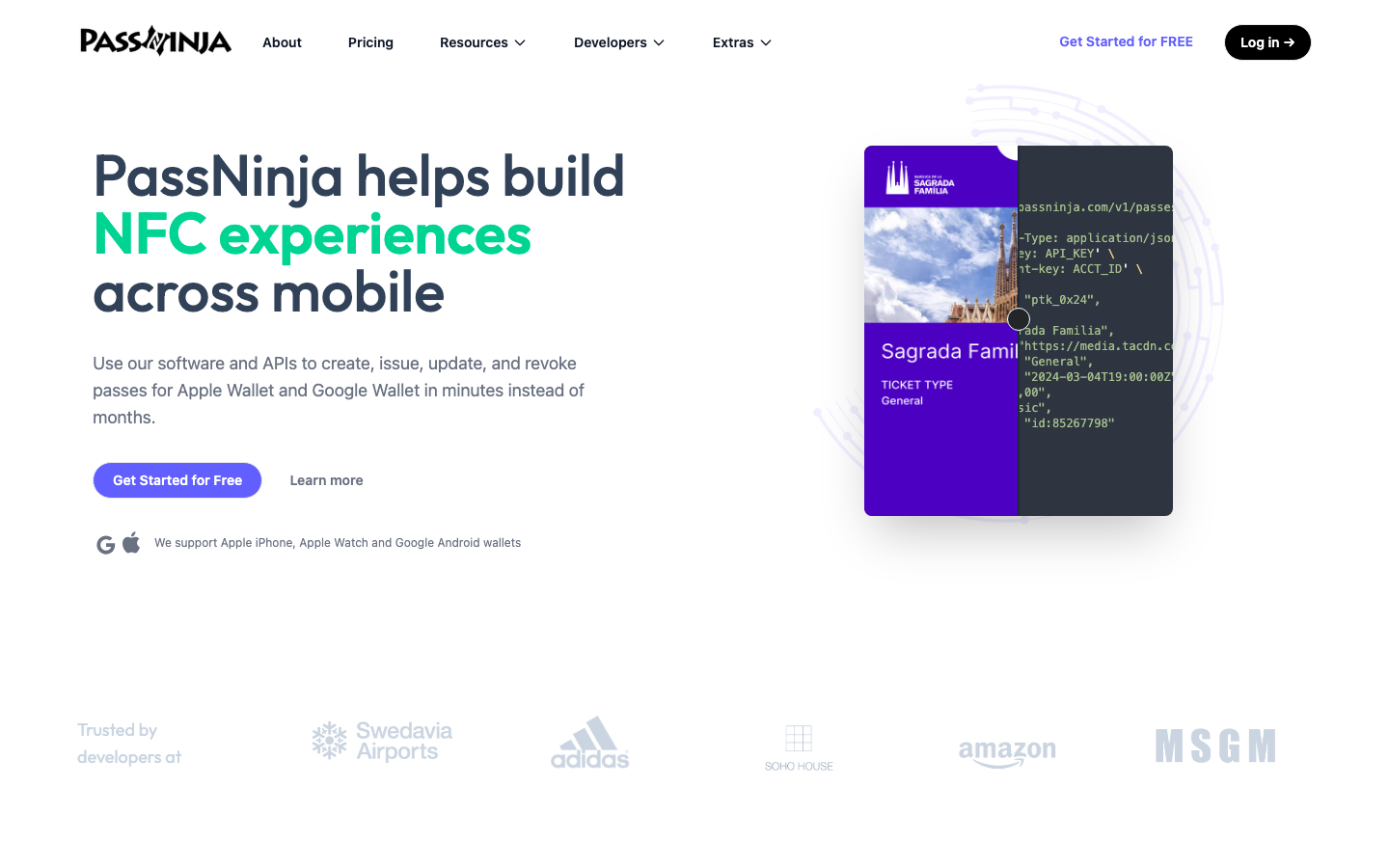
PassNinja is one of the strongest developer-oriented products in this category. It handles Apple Wallet and Google Wallet, can sign with its own certificate, supports NFC, ships SDKs, and includes delivery and lifecycle features. For many teams, that is exactly the right shape.
The reasons to compare alternatives are more specific:
- your passes are long-lived and active-pass billing gets expensive
- you only need a simple API and do not need NFC yet
- you prefer plain REST over SDKs and template setup
- you want a flatter monthly bill
- you want to keep your own product as the source of truth
This guide compares the realistic alternatives and where WalletWallet fits.
Quick comparison
| Provider | Entry price | Apple Developer account | Apple pass updates | Google Wallet lifecycle | Best fit |
|---|---|---|---|---|---|
| PassNinja | $21/template + $0.11/active pass/mo | Not required by default | Yes | Yes | Full lifecycle API with NFC and SDKs |
| WalletWallet | $39/mo for up to 100K passes | Not required | Yes | Yes | Simple Apple + Google Wallet API from your backend |
| PassKit | $39.50/mo + usage | Required | Yes | Yes | Enterprise wallet engagement |
| Passcreator | Active-pass tiers / enterprise | Required | Yes | Yes | EU enterprise workflows |
| PassSlot | $29/mo to $99/mo tiers | Required for production | Yes | Not confirmed publicly | Fixed-tier Apple Wallet projects |
| PassEntry | £199/mo pilot tier | Required | Yes | Yes | UK enterprise events and travel |
Why teams compare PassNinja alternatives
Active-pass pricing can be the wrong fit
PassNinja’s public model is based on templates plus active passes per month. That is a reasonable model when a pass is short-lived: event tickets, coupons, temporary credentials.
It becomes expensive when a pass stays installed for months or years. Loyalty cards, membership cards, digital IDs, and business cards can accumulate an active-pass bill for as long as users keep them.
WalletWallet bills by generation bucket instead. You create passes, update Apple Wallet installs when needed, and the bill does not grow just because old passes remain installed.
PassNinja includes more platform than some teams need
PassNinja’s breadth is a feature: Google Wallet, NFC, SDKs, webhooks, SMS/email delivery, and pass lifecycle tooling.
If your roadmap needs those now, keep PassNinja on the shortlist. If your immediate requirement is narrower, the extra platform surface can make the integration and bill feel bigger than necessary.
Some teams prefer a stateless pass API
PassNinja’s template model gives you reusable designs and lifecycle control. WalletWallet’s model is closer to “send pass JSON, get a signed pass, keep your own state.”
That is better when your app already has users, memberships, tickets, balances, and redemption records. The wallet API should translate your state into a pass, not become the source of truth.
Best PassNinja alternatives
1. WalletWallet: best for simpler Apple Wallet lifecycle
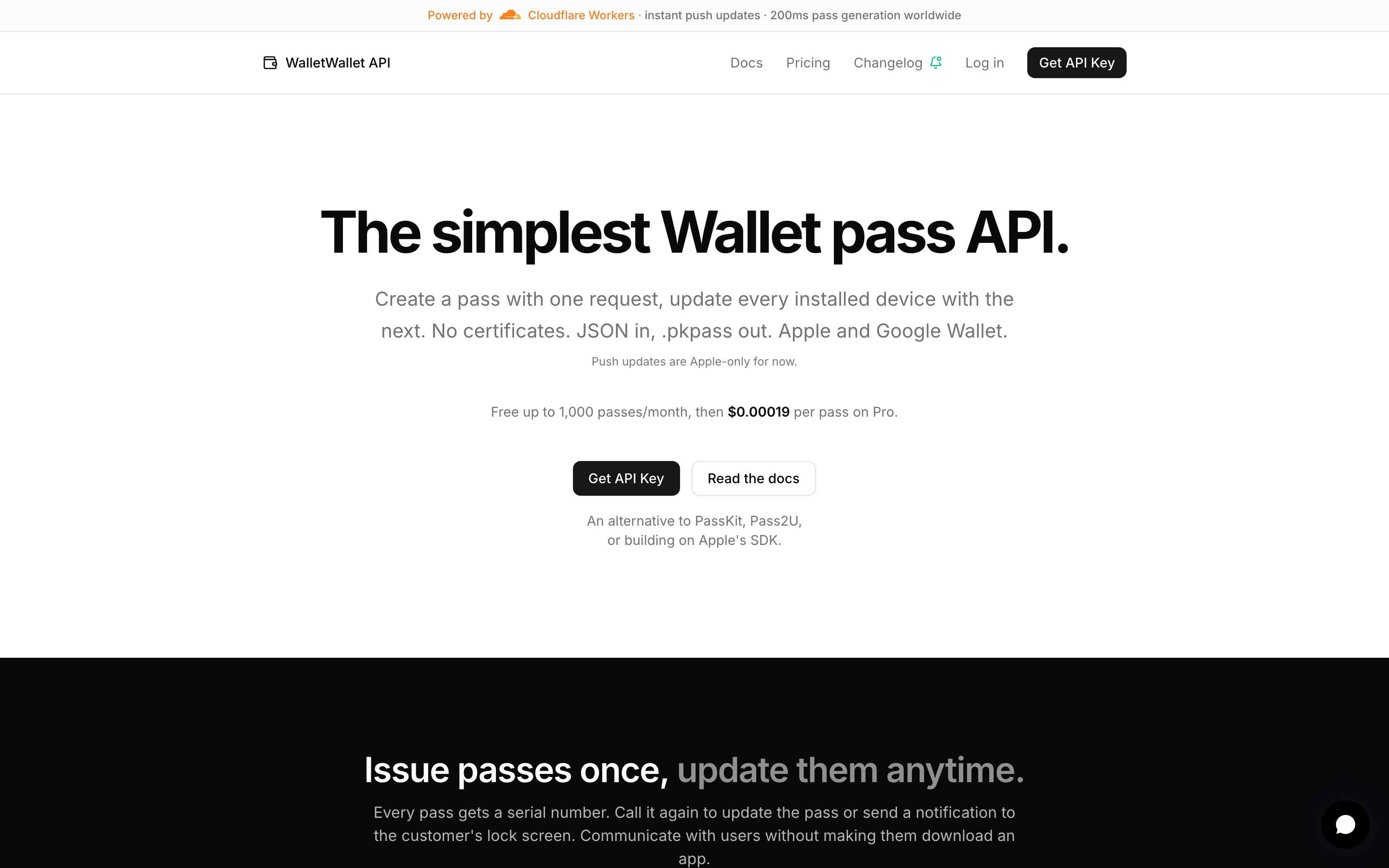
WalletWallet is the most direct alternative if your main reason for evaluating PassNinja is API simplicity or cost.
The API surface is small:
POST /api/passescreates a signed.pkpassPUT /api/passes/{serial}updates an installed Apple Wallet pass and pushes over APNs- one API key, no project setup, no required template object
WalletWallet signs with its platform certificate by default, so you do not need an Apple Developer account for the normal flow. The free tier covers 1,000 passes/month indefinitely, and Pro is $39/month for up to 100,000 passes.
Batch import in the dashboard covers the non-code path for a one-off batch: upload a CSV with one row per pass, design a single pass where the CSV columns fill the fields, and download a CSV of serial numbers and share links per row. Batches run up to 100 records on the free plan and 1,000 on Pro.
WalletWallet is also a remote MCP server: Claude or ChatGPT sign in with OAuth and create, update, and revoke passes from a prompt (see the Claude guide). PassNinja’s MCP server is a local command-line package that runs on your machine with an API key.
Where PassNinja is better: NFC, native SDKs, SMS/email delivery, and webhooks. If those are must-haves, PassNinja is still the better product.
Read the detailed PassNinja vs WalletWallet comparison.
2. PassKit: best for enterprise wallet programs
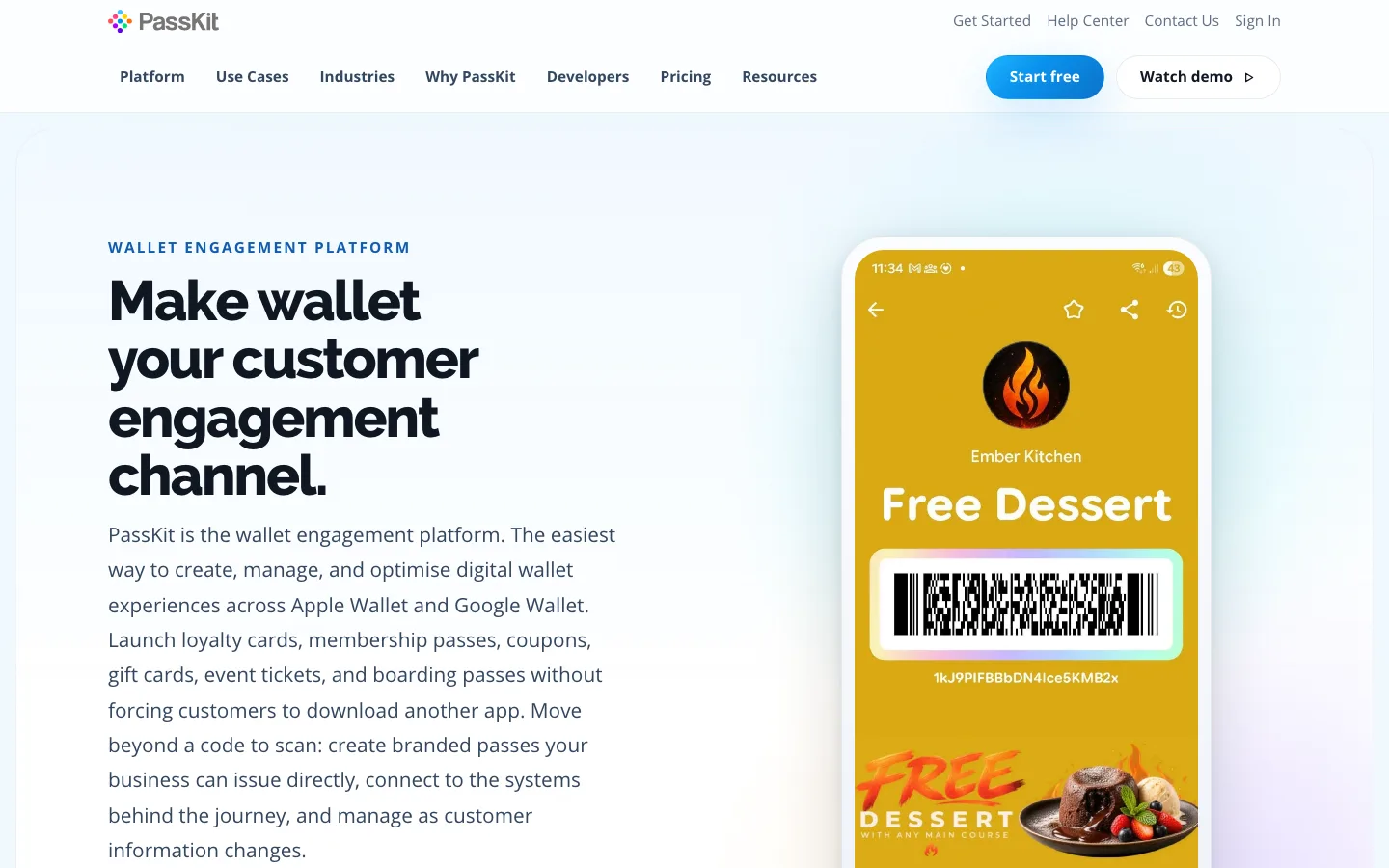
PassKit is broader and more established than PassNinja. It is built for full wallet campaigns across Apple Wallet and Google Wallet, with no-code tooling, analytics, NFC, integrations, and a procurement-friendly footprint.
It is not the cheapest or smallest API. Customers typically bring their own Apple Developer account and Pass Type ID, and pricing includes a platform fee, pass volume, and team seats.
Choose PassKit over PassNinja if your evaluation is less about developer ergonomics and more about an enterprise wallet program with staff workflows, analytics, and integrations.
Read the PassKit comparison or the PassKit alternatives guide.
3. Passcreator: best for EU enterprise workflows
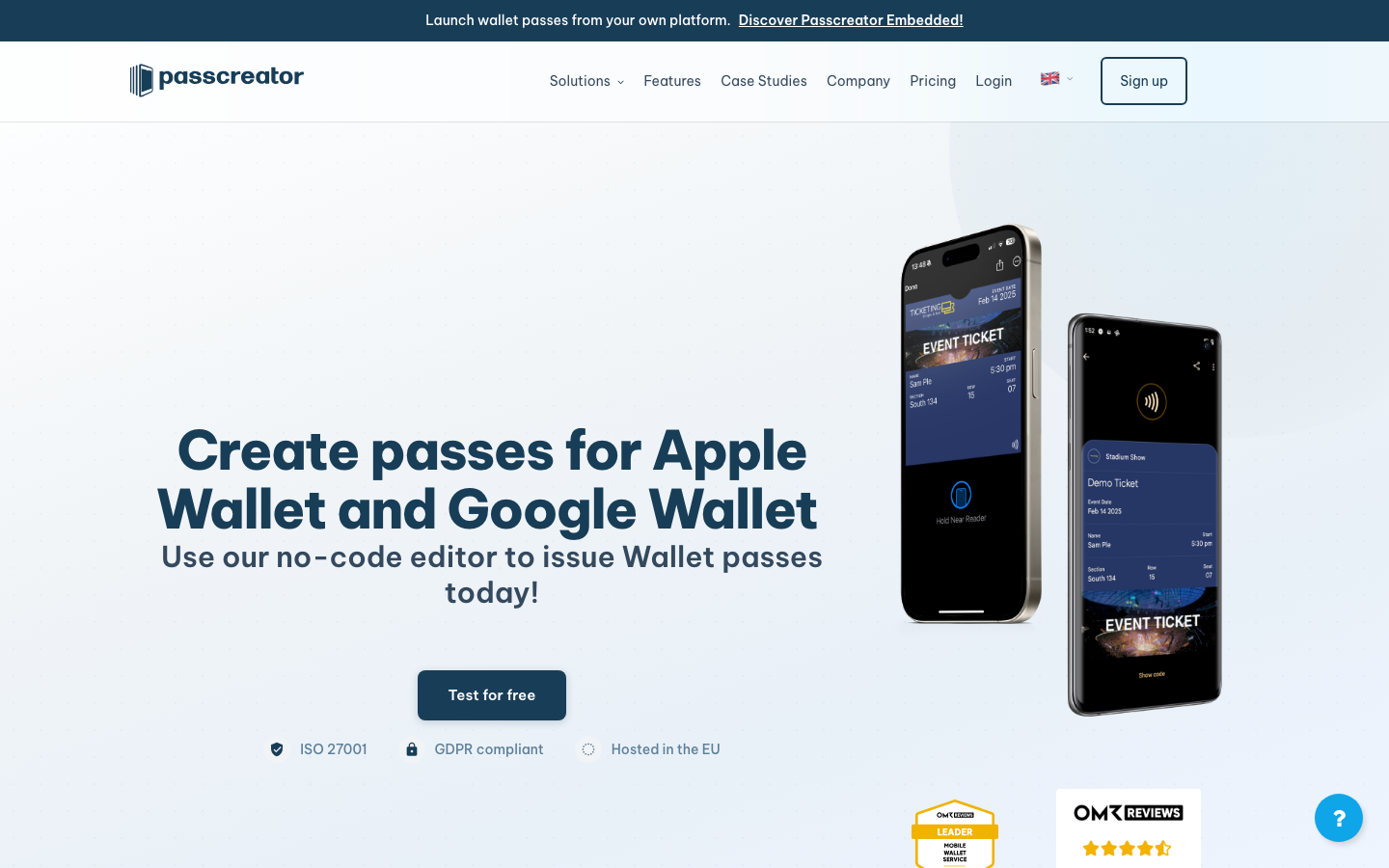
Passcreator is a better fit when the wallet pass is part of a broader European campaign operation: visual design, scanner app, Google Wallet, NFC, workflow automation, and enterprise controls.
Compared with PassNinja, it leans more toward business operations and procurement. Compared with WalletWallet, it is much broader and heavier.
Use Passcreator when you need the surrounding workflow platform, not just an API.
Read the Passcreator comparison.
4. PassSlot: best for fixed public tiers
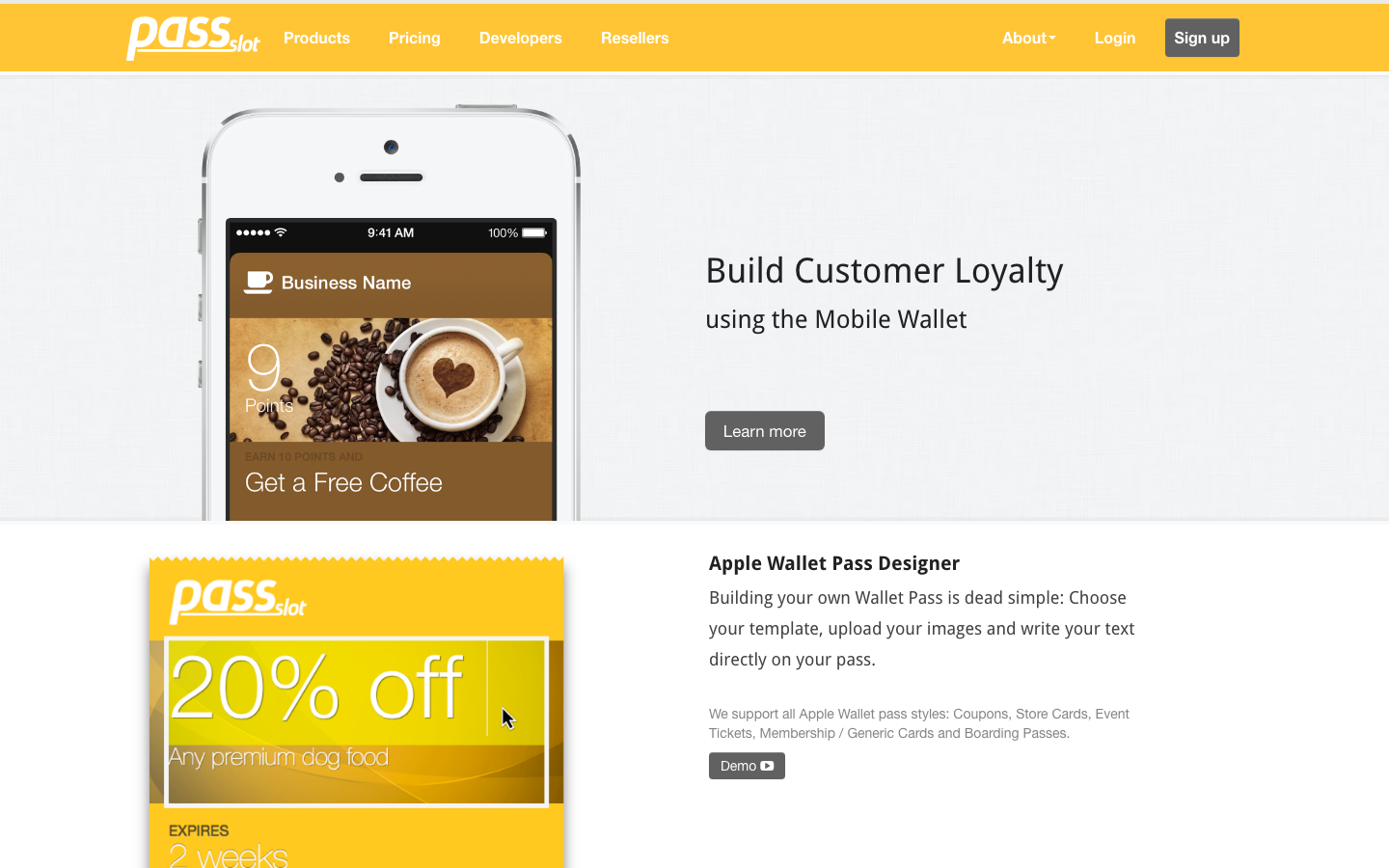
PassSlot is worth a look if your main concern is predictable tiered pricing. Its public tiers are simpler to model than active-pass billing, and the product includes tooling WalletWallet does not, including a no-code designer, iBeacon support, a scanner app, and payment integrations.
The trade-off is that production use generally expects your own Apple certificate, and you should verify current support and modern Google Wallet expectations before committing.
Read the PassSlot comparison.
5. PassEntry: best for enterprise events, retail, and travel
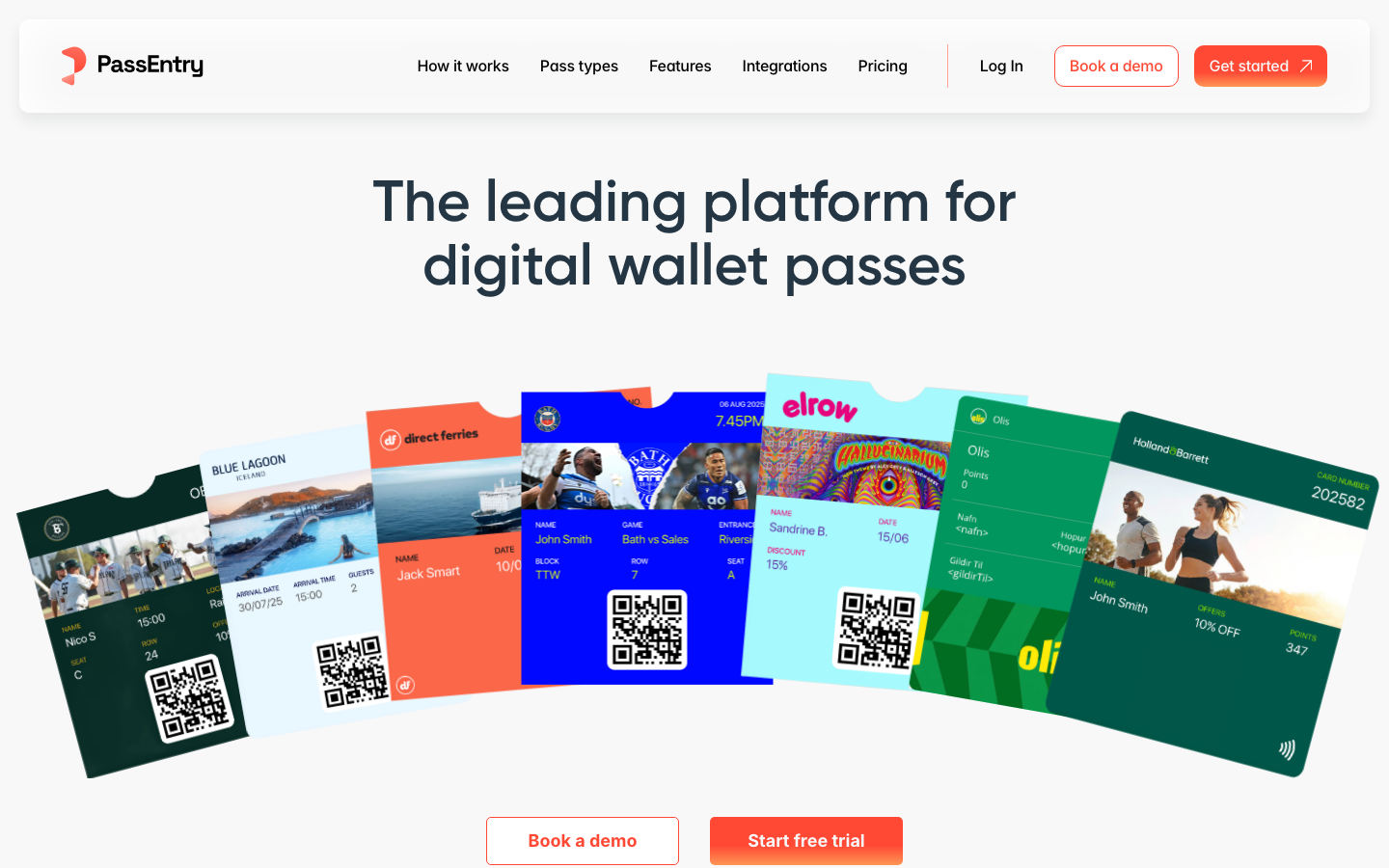
PassEntry is more expensive at the entry tier, but it is aimed at a different buyer: enterprise event, retail, travel, hospitality, and aviation teams. It includes Apple and Google Wallet, pass updates, geofencing, NFC, support expectations, and higher-touch plans.
PassEntry is an enterprise alternative for deployments large enough to justify the platform, rather than a lightweight replacement for PassNinja.
Read the PassEntry comparison.
WalletWallet vs PassNinja pricing shape
The most important difference is the billing unit.
PassNinja charges per template plus per active pass per month. WalletWallet charges by generation bucket.
For short-lived event tickets, active-pass billing can track usage reasonably well because passes expire quickly. For long-lived loyalty cards or membership passes, active-pass billing compounds as your installed base grows.
Example from the current comparison research:
| Workload | PassNinja | WalletWallet |
|---|---|---|
| 1,000 active passes, 1 template | about $131/mo | $0 if within free generation tier |
| 10,000 active passes, 1 template | about $1,121/mo | $39/mo |
| 100,000 active passes, 1 template | about $11,021/mo | $39/mo |
Those numbers are not a universal verdict. They describe long-lived passes. If your passes expire quickly and you need Google Wallet lifecycle or NFC, PassNinja’s higher bill may be buying exactly the capabilities you need.
When PassNinja is still the right choice
Pick PassNinja when:
- you need NFC support
- you want vendor SDKs in your team’s language
- you want SMS/email pass delivery bundled into the wallet product
- you need webhooks for install, update, and uninstall events
- active-pass pricing matches your pass lifetime
Those are real reasons. WalletWallet intentionally does not cover all of that surface.
When WalletWallet is the better PassNinja alternative
Pick WalletWallet when:
- you only need Apple Wallet lifecycle right now
- you want
POSTto create andPUTto update - you do not need SDKs because plain HTTP is enough
- you want to generate a batch of passes from a CSV in the dashboard rather than script the loop yourself
- you want to avoid active-pass billing for long-lived cards
- your backend already owns the program state and analytics
- you want no Apple Developer account by default
Start with the docs or compare both products side by side on PassNinja vs WalletWallet.
FAQ
What is the best PassNinja alternative for Apple Wallet only? WalletWallet is the cleanest alternative if you only need Apple Wallet generation and updates from your backend. It is smaller than PassNinja, cheaper for long-lived passes, and does not require an Apple Developer account by default.
What is the best PassNinja alternative for enterprise campaigns? PassKit is the strongest enterprise alternative. Passcreator and PassEntry are also worth evaluating for EU and UK enterprise use cases.
Does WalletWallet require an Apple Developer account? No. WalletWallet signs with its own platform certificate by default. Bring-your-own-cert can be supported as an option, but it is not required for the normal path.
Does WalletWallet support Google Wallet like PassNinja?
Yes for the core lifecycle. One API call issues to both wallets, and PUT /api/passes/{serial} updates and pushes to Google as well as Apple. PassNinja still goes further on NFC, native SDKs, and SMS/email delivery, so pick it if you need those specifically.
Can I migrate from PassNinja to WalletWallet? Apple Wallet pass generation and updates can usually be mapped because both products ultimately produce standard wallet-pass fields. Workflows that depend on NFC, webhooks, SDKs, or SMS delivery should stay on PassNinja or use a hybrid setup.
Learn more: compare PassNinja and WalletWallet or explore all wallet pass comparisons.
Build your first wallet pass
Turn one JSON request into a pass that installs in Apple Wallet and Google Wallet, with live updates that reach both.