100 Digital Membership Card Ideas From Real Programs
Review 100 real digital membership cards from museums, libraries, associations, sports clubs, retailers, cinemas, and travel programs—plus practical design patterns to borrow.
What is interesting about digital membership cards is how differently they are used. A museum may need a family card and separate guest passes. A sports club may combine identity, qualifications, and venue access. A retailer may care most about a barcode that is always available at checkout. The card is the same basic object, but the job it does changes with the membership program.
This is a review of 100 real implementations across museums, libraries, alumni and professional associations, sports clubs, retailers, cinemas, travel programs, and member communities. Every example includes a credential a member can actually present: a Wallet pass, scannable in-app card, digital member ID, or comparable proof of active membership. A paid app or subscription without a member credential does not count.
Find your kind of membership
- Culture and museums
- Zoos, gardens, and conservation
- Libraries and learning
- Alumni and professional identity
- Sports and fitness
- Retail and everyday membership
- Cinema memberships
- Travel and hospitality
- Places, access, and community
- Associations and member networks
What makes a membership card design useful?
A good-looking pass is not automatically a good member experience. The useful ones answer four questions in seconds:
- Who am I here? Show the member name, household, chapter, tier, or role.
- What can I do? Put the primary entitlement near the front, not behind a wall of terms.
- What happens next? Surface the next visit, renewal date, remaining uses, or one useful action.
- Can staff trust it? Give staff a scannable identifier and a live status check rather than encoding personal data or the access decision in the QR code.
Culture and museums
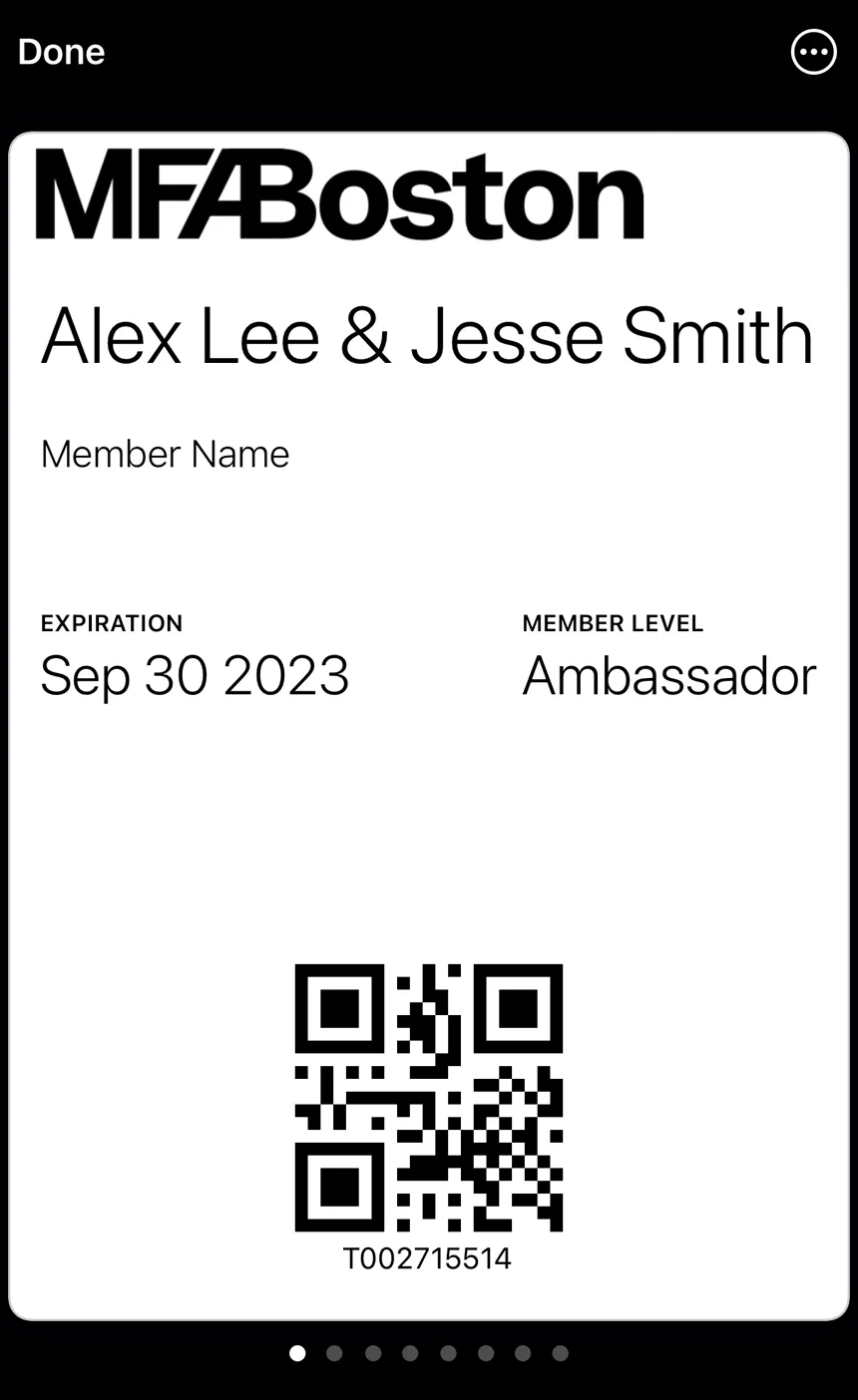
- Museum of Fine Arts Boston — make the front desk decision visible. Its digital member card puts the member names, level, expiry date, and scan code together, while the details view explains benefits. Borrow the split: proof on the front, explanation on the back.
-
Design Museum — design around the arrival ritual. The museum’s digital card communicates unlimited paid exhibitions, priority entry, and shop and café discounts. A card can lead with the moment members most want: skipping the queue.
-
Natural History Museum London — use one card across many spaces. The museum’s digital card works in Apple Wallet and Google Wallet and is scanned at entrances, exhibitions, events, and members’ rooms. Its flexible circular identity shows how one recognizable system can stretch across each of those moments.
-
RISD Museum — let a card travel. RISD lists the reciprocal programs for each level inside its digital membership experience, allowing the same credential to work beyond one building. Consider the network, not only the home venue.
-
Vero Beach Museum of Art — make renewal feel automatic. Its membership card updates after renewal and adds benefits, reciprocal information, notifications, and direct museum links. The design lesson is continuity: renew the same card rather than making members install another.
-
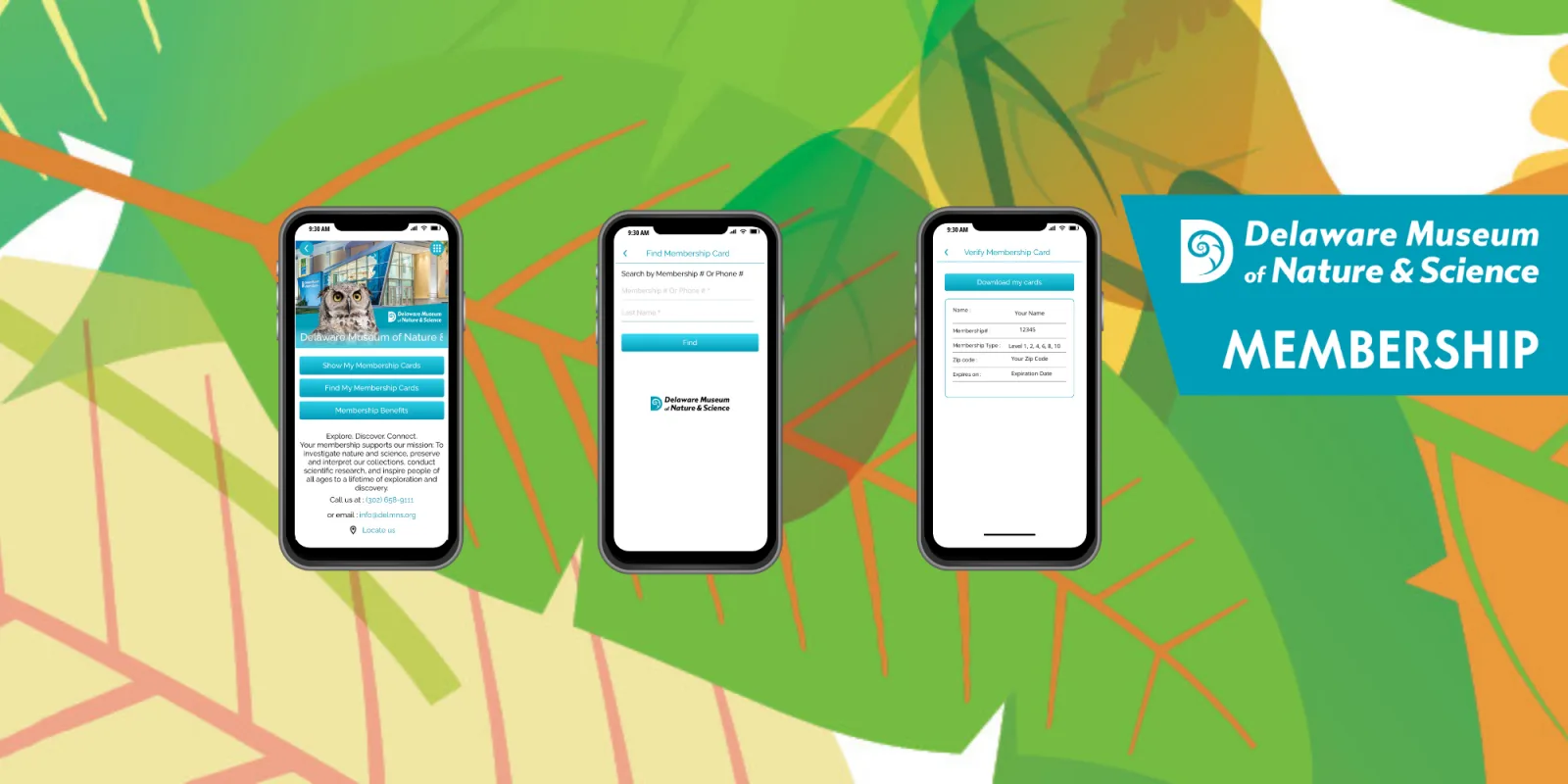
Delaware Museum of Nature & Science — pair proof with orientation. The member app combines a scannable card with a floor plan, FAQs, and reciprocal institutions. If arrival is confusing, the card’s details can double as a tiny visit guide.
-
Please Touch Museum — put reservations one tap from the card. Members can reach reservations from pass details and use the credential across the children’s-museum reciprocal network (FAQ). A card becomes more valuable when it starts the visit, not just verifies it.
-
Anchorage Museum — design for self-service check-in. Members can scan a digital card at a member kiosk, while the card also shows tier, renewal date, and reciprocity. A clear kiosk-ready barcode can shorten the busiest part of the member journey.
-
National Center for Civil and Human Rights — keep guest benefits separate from the primary card. Its digital membership program puts the named card in a phone wallet while keeping guest passes and coupons as separate items in the app. Sharing a benefit should not require sharing the member’s identity.
-
Martha’s Vineyard Museum — make benefits spendable and shareable. Its program combines digital cards and guest passes with a ten-voucher program passbook. A member credential can be the cover for a small wallet of benefits rather than one all-purpose barcode.
Zoos, gardens, and conservation
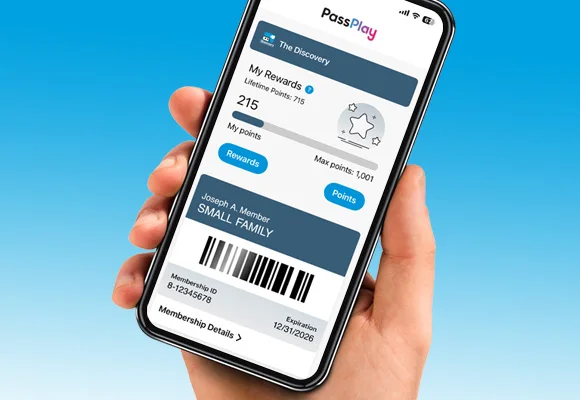
- The Discovery — reward exploration, not just purchases. Members scan QR codes around the museum to earn points redeemable for renewal discounts, shop savings, and behind-the-scenes experiences (digital cards). This is a compelling pattern for trails, exhibits, and multi-site programs.
-
Brooklyn Botanic Garden — separate reusable identity from consumable passes. BBG keeps the member card, guest passes, and parking passes as distinct digital items (FAQ). Readers can see what remains active and what has already been redeemed.
-
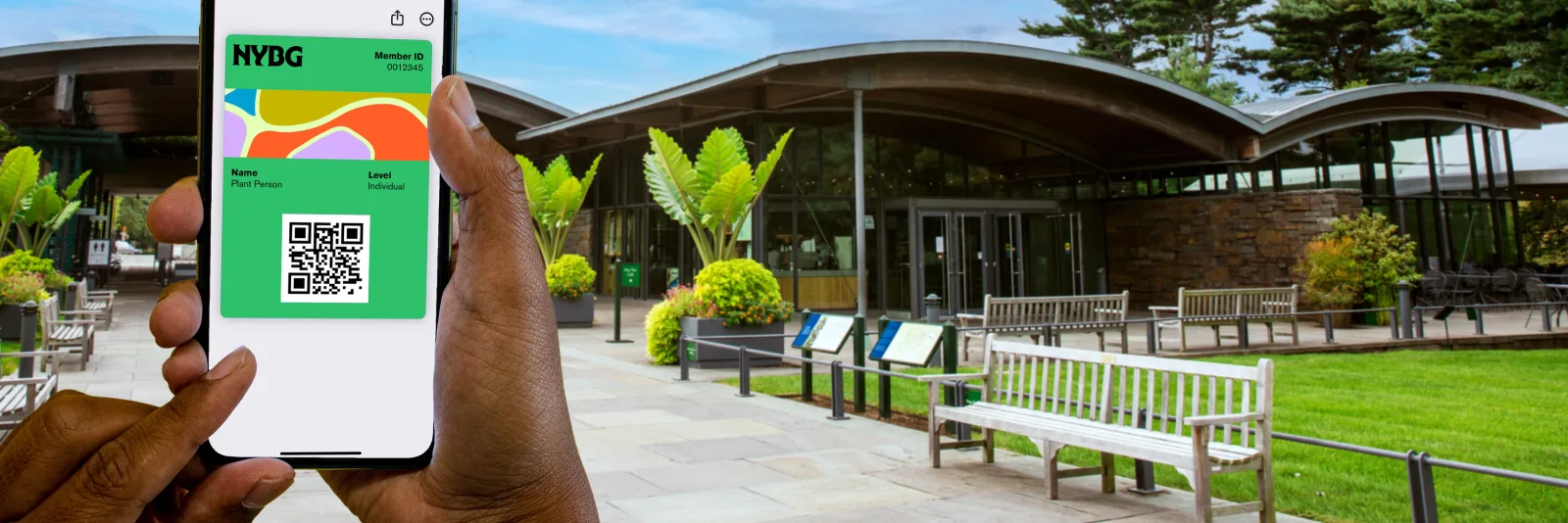
New York Botanical Garden — design sharing deliberately. NYBG sends separate, one-time digital guest and parking vouchers and explains when they may be shared (digital card FAQ). Do not make members screenshot the primary card to share a benefit.
-
Missouri Botanical Garden — let one card cover a family of places. The digital membership card works at the Garden, Butterfly House, and Shaw Nature Reserve. A multi-site pass should name the included places so members understand its reach.
-
National Aquarium — put remote benefits on the card too. The program places a dining discount code on the digital membership card, making the credential useful for online ordering as well as contactless entry. Think beyond the scanner at the door.
-
Woodland Park Zoo — make a flexible guest an explicit entitlement. Its membership model supports a named adult plus an optional flexible guest, reflected in the digital-card rules. Household and guest access should be legible rather than hidden behind a generic “Family” tier.
-
Cheyenne Mountain Zoo — give app people and Wallet people a choice. The zoo offers the richer app or a direct Apple/Google Wallet route (instructions). A card should not force a full app install when the member only needs entry.
-
Toledo Zoo & Aquarium — update the existing card after renewal. Its digital card refreshes after a new purchase instead of requiring another download. Preserve the place where a member already expects to find the credential.
-
Zoos Victoria — combine a card with account self-service. Members can use a digital wallet card or membership barcode and update details through the member login (registration flow). The card can link back to the source record without trying to become the account itself.
-
Maryland Zoo — connect the format change to the mission. The zoo frames digital cards as convenient, lower-waste, and lower-cost (card guide). When removing plastic, explain where the saved money and material go.
Libraries and learning
-
Wellesley Free Library — design for the self-check machine. Its app displays a scannable card and also handles holds, renewals, fines, and events (library app). The card is the shortest path to a frequent task, not the app’s home screen trophy.
-
Vancouver Public Library — support several cards on one phone. VPL lets a user swipe between multiple digital barcodes (app guide). This is a thoughtful model for parents, carers, team managers, and household administrators.
-
Toronto Public Library — turn an object in the world into a query. The library app pairs the member card with a book-barcode scanner that checks availability. A membership experience can help people discover value between visits.
-
Kent District Library — let the member scan before they visit. KDL’s app can scan a book’s code in a shop or a friend’s home and search the library. This reverses the usual flow: the membership travels into the reader’s everyday life.
-
Seattle Public Library — make the app itself a card. Seattle describes its mobile experience as both a service hub and a digital library card. If one task dominates, name the product after the outcome members recognize.
-
Minuteman Library Network — make one interface work across many local brands. Patrons at 43 libraries can use the same app and scannable card (Wellesley overview). A shared credential can preserve local identity while reducing duplicated infrastructure.
-
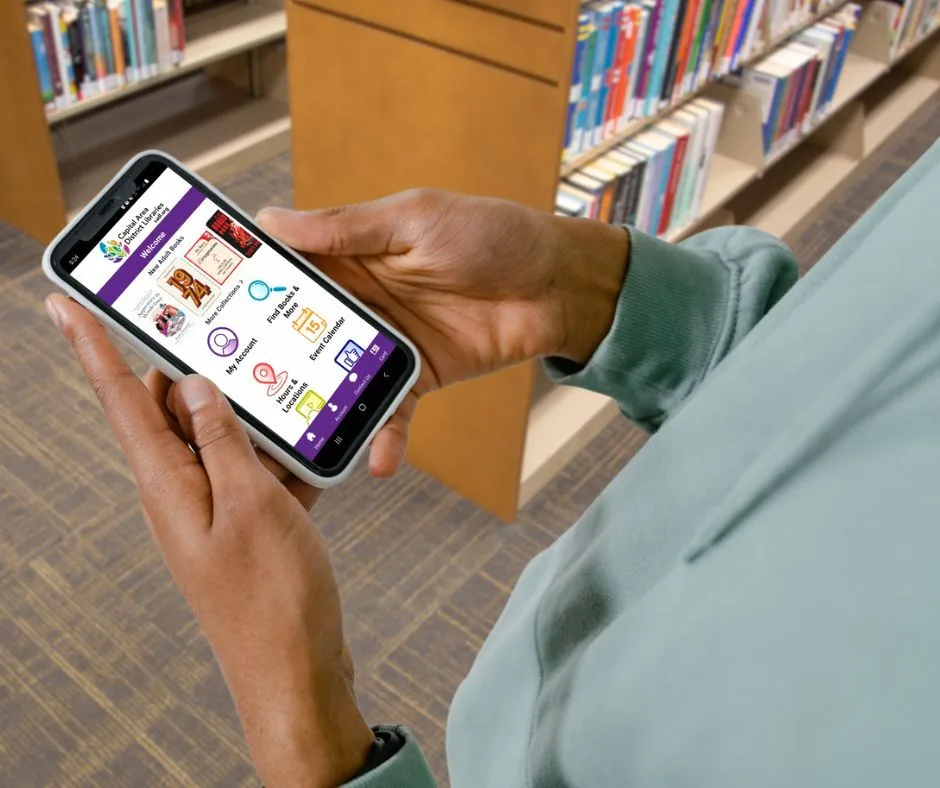
Capital Area District Libraries — keep the library card beside the catalogue. The CADL app includes a scannable digital library card alongside search, holds, renewals, events, and account access. The credential stays close to the tasks that make it useful.
-
Apple student ID — combine identity, access, and stored value carefully. Participating campuses can use a wallet student ID for dorms, libraries, events, cafés, laundry, and shops (Apple’s guide). One credential can serve many contexts, but each interaction should reveal only what it needs.
-
Books Unbanned — make eligibility part of the cause. Participating US libraries issue free digital cards to young people who need access to challenged books (Brooklyn Public Library). A card can represent a public promise, not merely account administration.
-
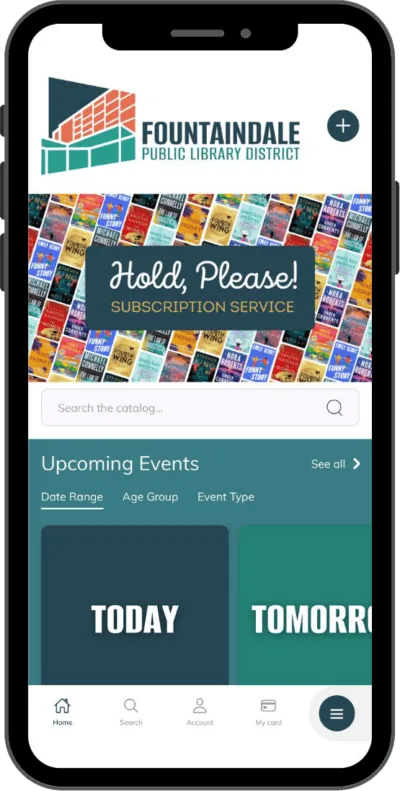
Fountaindale Public Library — keep the card in the persistent navigation. Its mobile app places a “My card” destination in the main navigation and provides a barcode for self-check kiosks. The card should be reachable before the member reaches the machine.
Alumni and professional identity
-
USC Alumni Association — turn a biography into a compact credential. USC’s digital alumni card displays the graduate’s degree year and supports campus dining and library benefits. Choose one identity field that members feel proud to show.
-
University of Alabama National Alumni Association — make the card a local community finder. Its alumni app combines the card with nearby events, chapters, news, and perks. Location is most useful when it reveals community rather than just triggering ads.
-
University of Illinois Alumni Association — keep offer codes in the details view. Its wallet card regularly updates benefits, codes, offers, and members-only events. Time-sensitive value belongs behind a stable identity surface.
-
University of Washington Alumni Association — use the web as the fallback. UWAA provides a mobile web card and instructions to save it to the home screen (member card). A lightweight web credential can reach devices that do not support your ideal Wallet flow.
-
NJIT Alumni Association — let benefits grow without reissuing the card. NJIT says its digital alumni card can be updated as benefits are added and can send campus-relevant notices. Stable shell, evolving value.
-
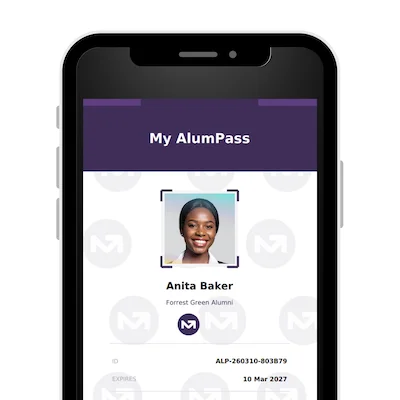
MyAlumPass — pair membership with verified achievement. The program combines institution-approved alumni status, identity checks, partner rewards, and Apple/Google Wallet delivery (program page). This is closer to a portable credential than a discount card.
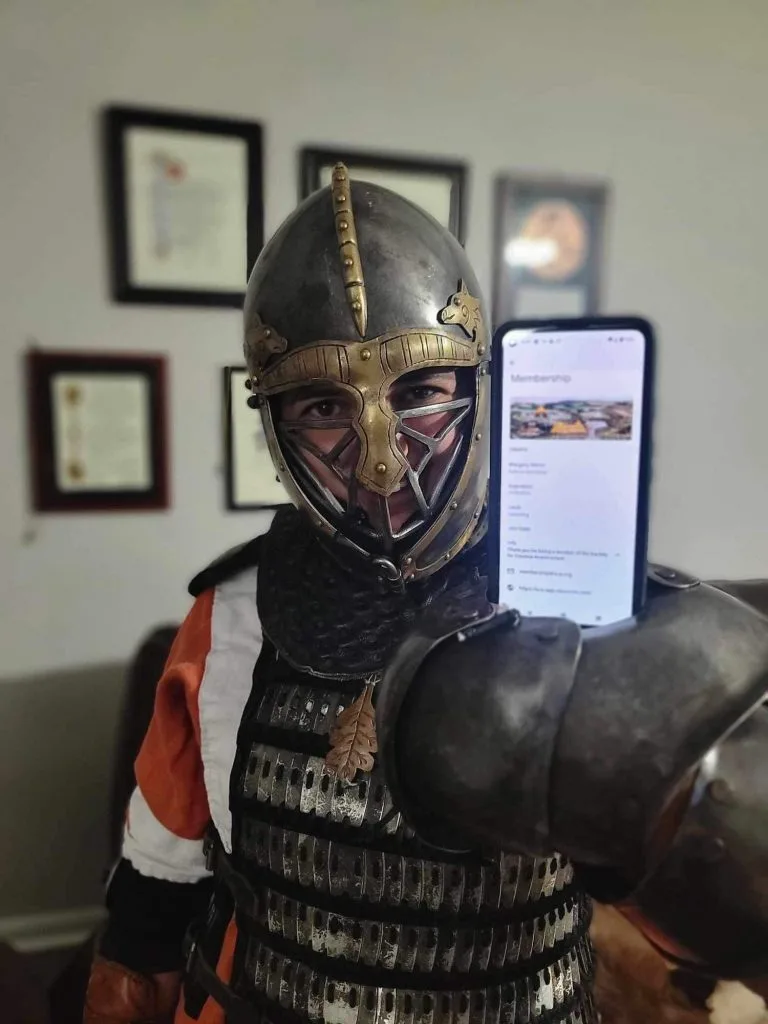
- Society for Creative Anachronism — respect the member’s chosen identity. Its Wallet card updates when a member changes their Society name and allows family cards to be shared between devices (announcement). The source of truth may not be a legal-name field.
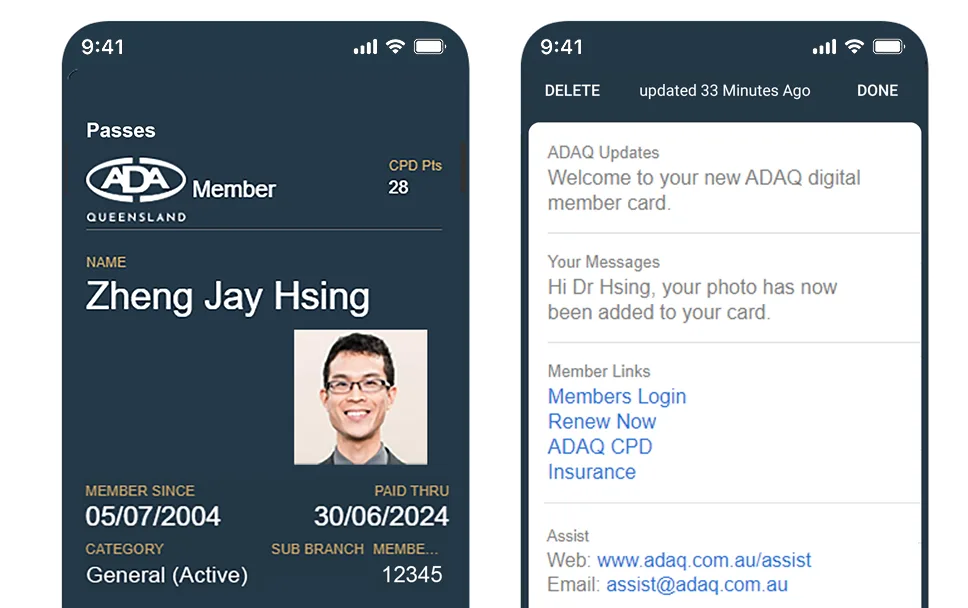
- Australian Dental Association Queensland — put continuing education beside identity. ADAQ connects its digital member card to CPD tracking, resources, lifestyle offers, and urgent updates. A professional card can show current standing and the next requirement.
-
International Union of Painters and Allied Trades — make qualifications portable. IUPAT’s member portal includes certifications, completed courses, dues, pension hours, and a digital card. “Email to employer” turns the credential into a work tool.
-
International Police Association — let members verify one another. The IPA digital-card app supports both display and member-to-member verification across participating national sections (App Store listing). A community credential can serve peer trust, not only staff check-in.
Sports and fitness
-
Hull FC — make one season card carry the season. Members scan the same Apple or Google Wallet credential at each home league fixture (2026 FAQ). A durable pass is calmer than asking fans to find a fresh attachment every match.
-
Arsenal — update the card with the next event. Arsenal’s digital pass loads eligible tickets onto a member’s phone and is used at the turnstile (digital-pass support). A membership card can also be a changing event surface.
-
FC Barcelona Penyes — show the group inside the larger group. A supporter who belongs to more than one official penya selects the club whose digital card they want to view (card guide). Chapter identity can matter as much as the parent brand.
-
Rugby Football Union GMS — let one card work at the bar, door, and event. The RFU’s digital member card can prove status, support local discounts, manage ticketed access, and work with compatible restricted-area doors.
-
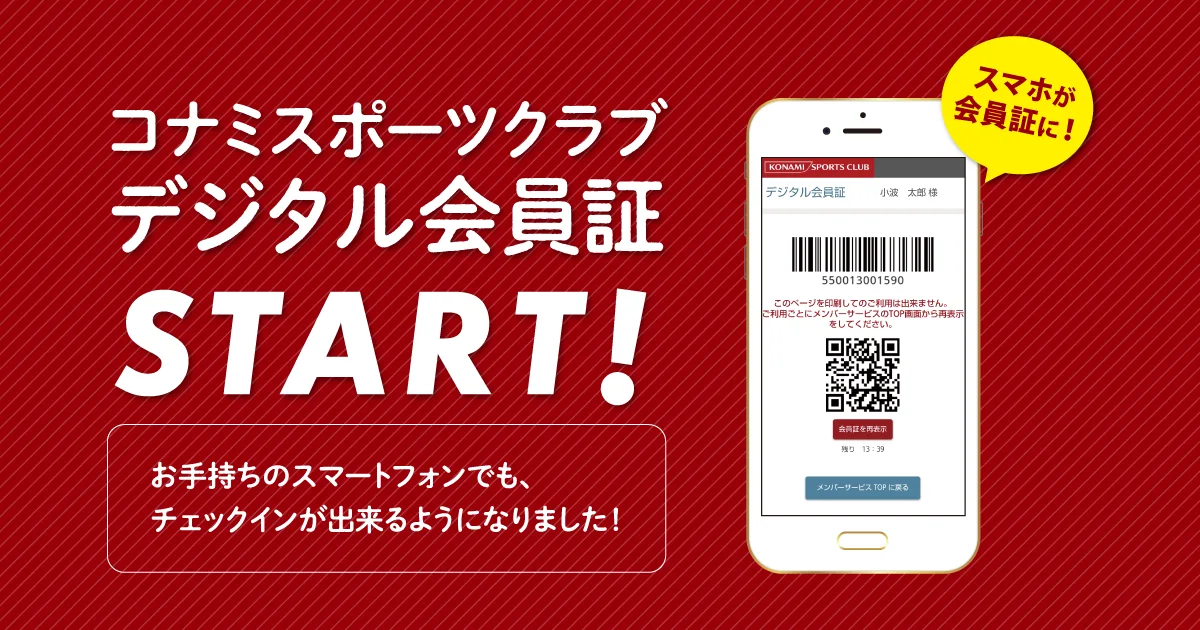
Konami Sports Club — reduce the check-in screen to one big action. The club’s digital member card is reached through a prominent card icon and displayed for check-in. At the front desk, speed beats feature density.
-
Basic-Fit — make guest access a controlled handoff. The fitness chain uses an in-app QR code and requires eligible guests to be registered before entry (current terms). A guest benefit needs its own state and rules, not a screenshot of the primary member code.
-
Basketball England — make match-day status verifiable offline. The HoopsHQ digital card shows photo ID, registration, role, and live membership status, then caches the card for poor-connectivity venues. Team managers can also view the cards attached to a lineup.
-
Golf Australia — let the card follow the member’s home club. The GA digital card updates when a golfer’s home club changes and travels with handicap history (app overview). Separate the member’s enduring identity from their current affiliation.
-
Christchurch Football Club — make installation work from email or desktop. Its digital card guide supports a direct phone link or a desktop QR code leading to Apple Wallet and Google Wallet. The delivery route matters as much as the pass design.
-
USA Swimming — put eligibility beside the member ID. The official USA Swimming app includes a Digital Member Card together with membership status, certifications, and athlete times. A sports credential is more useful when it answers both “Who is this?” and “Are they eligible?”
Retail and everyday membership
-
Co-op — make the digital card contactless. The Co-op Membership app provides a contactless digital card for Member Prices and offers, while also showing the local cause the member supports. The checkout credential can still carry the cooperative relationship.
-
Costco — bind a high-trust card to one verified device. Costco’s in-app digital membership card includes a photo and can show renewal and reward information. If sharing is prohibited, the design and device rules should make that expectation clear.
-
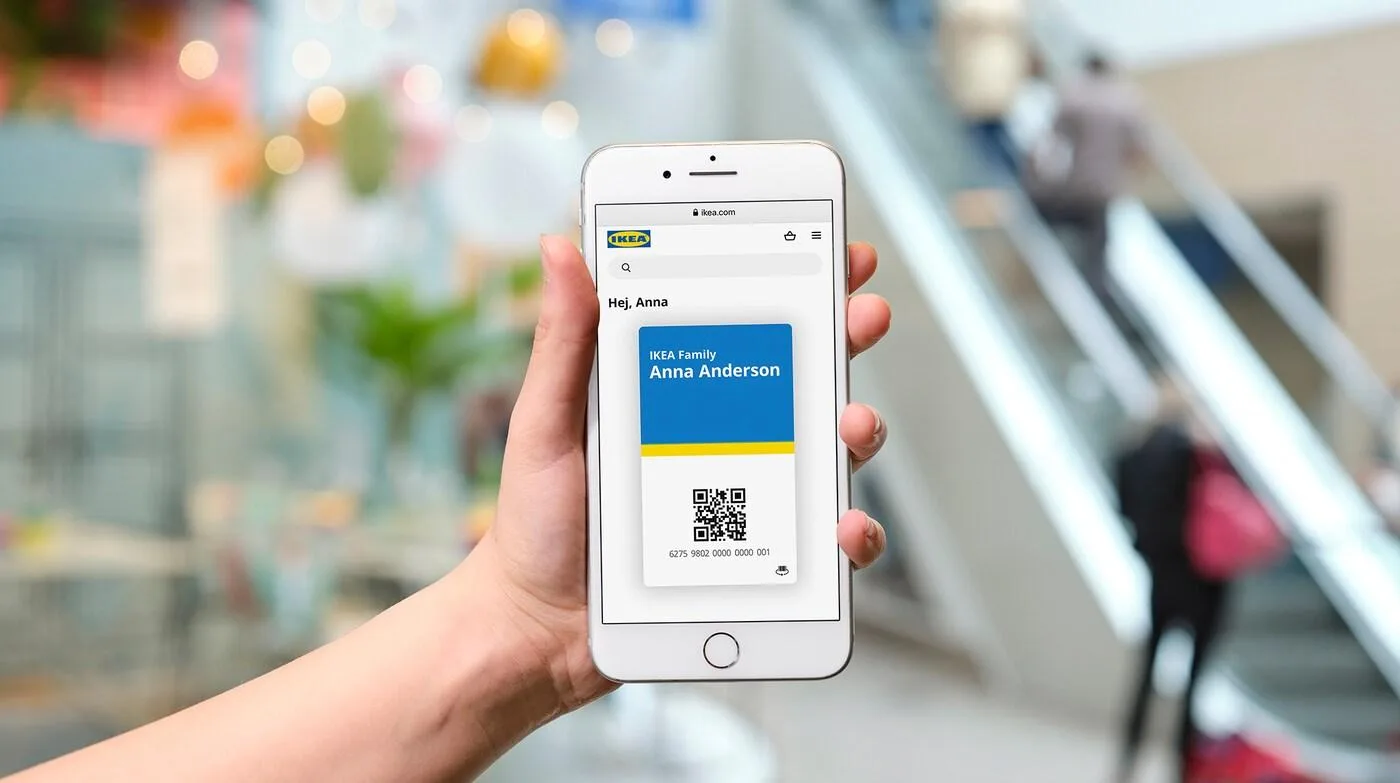
IKEA Family — make the card recoverable from everywhere. IKEA surfaces the member barcode in the app, account, emails, kiosks, and mobile wallet (IKEA Family). Redundant access is excellent design when the card is needed at a checkout line.
-
Sam’s Club — give each household member a separate credential. The digital membership card is available immediately after joining, while primary and household cardholders receive distinct member numbers. Shared benefits do not require a shared barcode.
-
Tesco Clubcard — let the digital card replace several physical forms. Tesco puts the digital Clubcard in its app, preserving one scan for points, Clubcard Prices, and account recognition without requiring the plastic card or key fob.
-
LEGO Insiders — turn owned products into membership touchpoints. The digital card works in Apple and Android wallets and shows the live points balance. Members can also scan the QR code in building instructions to register new, gifted, or previously owned sets and earn points.
-
Lush Club — turn packaging returns into stored value. Members show a QR code when returning eligible packaging, then receive credit immediately in Lush Wallet. The same wallet combines return credit, gift-card balances, top-ups, and payment, making the membership credential part of a closed-loop service.
-
Boots Advantage Card — support both app and native Wallet access. Boots lets members scan inside the app or add the digital card to Apple Wallet or Google Wallet. Native Wallet is a useful fast lane even when the app contains richer offers and account tools.
-
Everyday Rewards — combine the member scan with receipts. The Everyday Rewards app places the digital card beside boosters, points, and eReceipts and can add it to Apple Wallet or Google Wallet. Post-purchase records can make a retail card useful after checkout.
-
Barnes & Noble — show the current program level on the card. Its app membership card changes with Premium or Rewards status, provides a scannable barcode, and can be saved to Apple Wallet or Google Wallet. The card should state which benefits apply now.
Cinema memberships
-
AMC Stubs A-List — show a weekly allowance. A-List members can reserve a defined number of movies each week and present a virtual card at the box office (A-List FAQ). A usage card should answer “how many remain?” and “when do they reset?” without arithmetic.
-
Regal Unlimited — pair unlimited access with visible exceptions. Regal’s digital Subscription Pass covers standard screenings, identifies the member with a photo, and also functions as the Crown Club card. One credential can represent both a paid tier and the underlying loyalty program.
-
Cineworld Unlimited — make the maturity of the membership visible. The digital Unlimited card changes from red to black after the initial period, while retaining the member photo, ID, and QR code. A visual change can communicate earned standing without adding another tier label.
-
Picturehouse — show unused member tickets beside the card. The Picturehouse app combines a digital Membership card with the member’s free-ticket balance, discounts, and purchase history. Allowances are easier to use when they are visible at the same moment as proof of membership.
-
Palace Cinemas Movie Club — keep the visit history with the credential. The official Palace Cinemas app gives Movie Club members a digital card, rewards balance, and ticket history. The card can explain how the next reward was earned.
-
Cinema Club — make a simple visit counter explicit. The Cinema Club app uses a unique QR membership card and awards one free ticket after seven recorded films. A small, understandable counter can be more useful than a complex points currency.
-
TOHO-ONE — let one entertainment identity cross formats. TOHO’s official app presents a digital membership card for cinema, theatre, events, and merchandise while keeping points and special applications in one account.
-
HOYTS Rewards — make the web card a fallback. Members can retrieve the digital membership card in the HOYTS app or through the My Rewards website. The credential should not disappear when a member cannot install the app.
-
Landmark EXTRAS — issue the card at enrollment. Landmark provides a mobile-barcode digital membership card as soon as the member creates an account and selects a plan (program terms). Immediate issuance closes the awkward gap between joining and the first visit.
-
ODEON myLIMITLESS — make proof available on the web and in the app. The digital membership card appears as a QR code in both the online member area and the ODEON app and is checked at entry. A second delivery route is valuable when the app fails at the worst possible moment.
Travel and hospitality
-
Priority Pass — make the card answer “where can I use this now?” Its app combines a digital membership card with airport lounge and experience discovery (card FAQ). Location is useful when it resolves the next action.
-
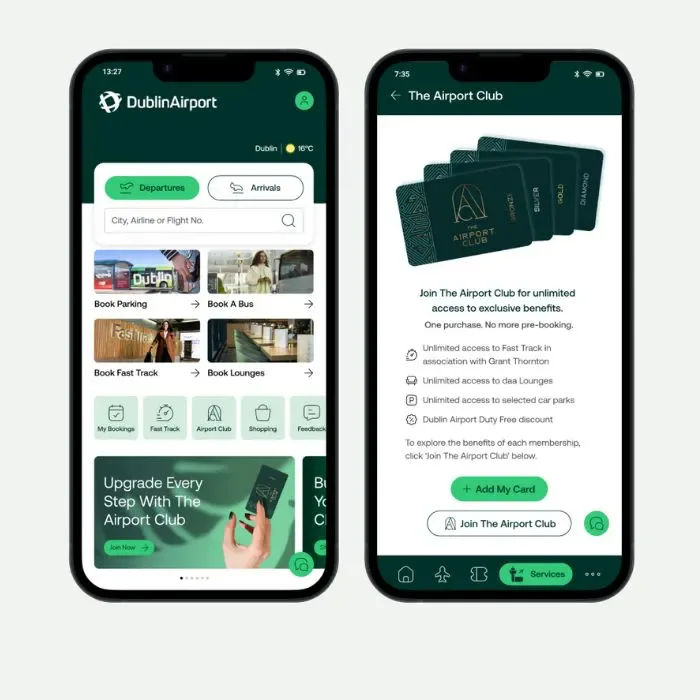
Dublin Airport Club — make the airport itself the membership. The digital membership card bundles Fast Track, lounges, parking, and airport discounts in the Dublin Airport app. The card turns several separate travel privileges into one local airport relationship.
-
Marriott Bonvoy — show status and the next stay together. Bonvoy combines member rates, points, tier benefits, and an in-app digital membership card. A travel card can prioritize the upcoming reservation when one exists, then revert to status between trips.
-
Hilton Honors — let the credential become a room key. At participating hotels, the app combines membership, arrival, room selection, and Digital Key (Digital Key). The best membership surface can transform when the member is on site.

-
Qantas Club — state exactly where the card grants access. Members use the Qantas App digital card at eligible lounges and can see the membership expiry in the same view. A network credential should make both validity and acceptance scope clear.
-
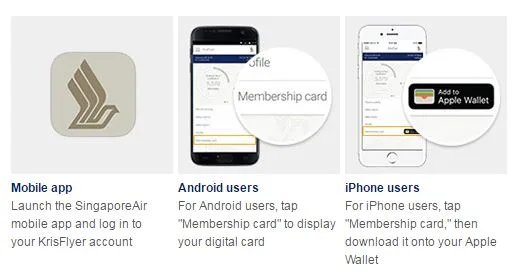
Singapore Airlines KrisFlyer — preserve alliance status on the digital card. The PPS Club and KrisFlyer cards work in the SingaporeAir app and at lounges, hotels, and partners. The card carries both the airline relationship and the status partners recognize.
-
ALL — Accor Live Limitless — present membership as a portfolio. The program connects hotel stays, dining, and experiences under one account (program terms). If benefits cross categories, organize the card details around moments, not internal business units.
-
British Airways Club — make status work across a partner alliance. The program’s tier benefits connect to oneworld recognition and appear on its digital membership card (Club FAQ). Partner status marks should include the equivalent level and usable benefit.
-
Emirates Skywards — support a household points strategy. My Family lets eligible members pool a proportion of miles in one account while a digital membership card makes the individual tier and member number portable. A membership design can distinguish the traveler, the shared balance, and who may redeem it.
-
Air New Zealand Airpoints — separate the rewards card from the status card. The Air NZ app shows a barcode for retail earning and, for eligible members, a separate travel card that verifies Star Alliance status. Different verification contexts can deserve different credential views.
Places, access, and community
-
CoWorkers — make the app itself the reception credential. The members-only CoWorkers app issues a QR code for entry across participating coworking locations and combines it with a location map and member directory. The card can be the start of a shared-space workflow, not a separate screen.
-
Elsewhere — make one pass coordinate online and venue benefits. The Brooklyn venue’s digital membership card works in Apple Wallet and Google Wallet and is scanned for entry and ticket discounts. The same membership also handles reservations, line priority, guest access, coat check, and private Discord channels.
-
Sporting Club of Sydney — let members share the correct entitlement. The club’s digital cards distinguish member, guest, and club entitlements and temporarily deactivate the printed equivalent when a pass is shared. Sharing should transfer a benefit, not duplicate it.
-
Watersound Club — require a photo card for member-account charges. The Watersound Club app provides a digital photo membership card used for account charges alongside bookings, reservations, and statements. Higher-risk actions deserve stronger visible identity than simple venue entry.
-
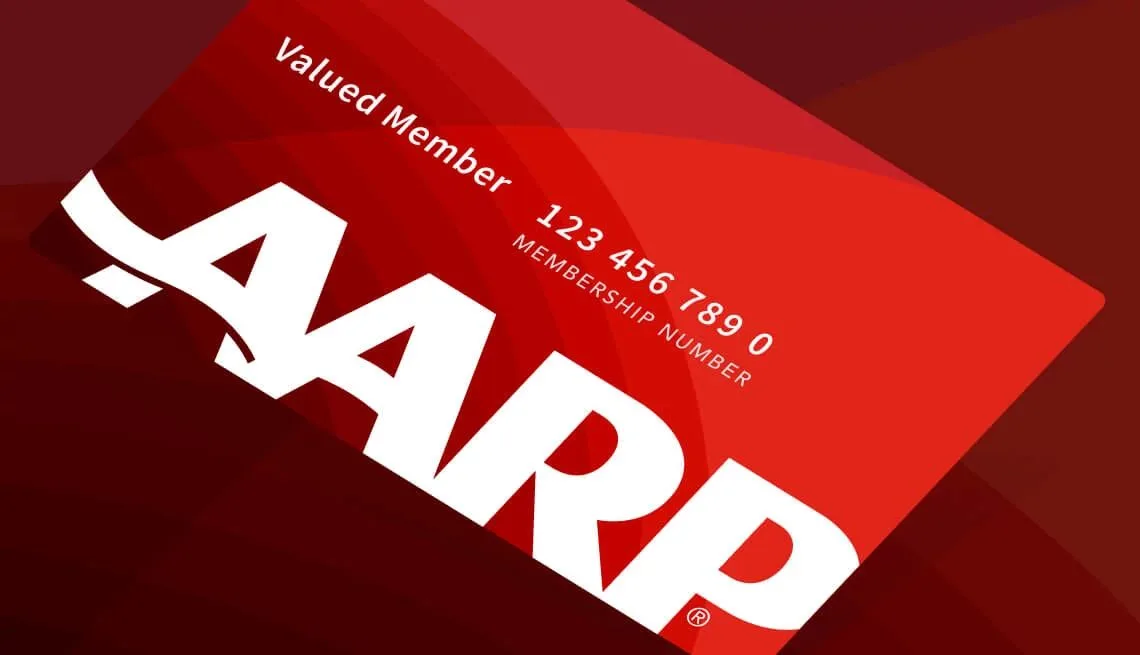
AARP — let one identity open many unrelated benefits. Membership spans advocacy, content, discounts, travel, and services, with a digital card in the app (digital card guide). Broad programs need a personalized “use near me” view more than a master list.
-
AAA — make the card start a help request. The app combines a digital membership card with roadside-assistance workflows (mobile app). For service memberships, the emergency action should remain available even when other features fail.
-
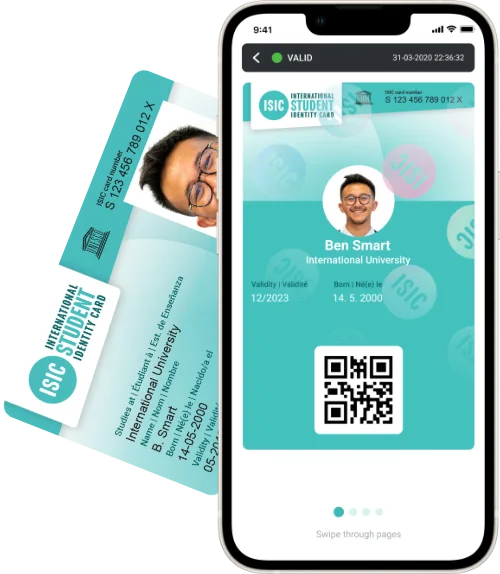
International Student Identity Card — make eligibility portable across borders. ISIC provides a digital student status and international benefit network (digital card). A global credential should make validity, issuer, and verification easy to understand across languages.
-
Blue Light Card — verify a community before showing its offers. Eligible workers access a large discount network through a digital membership (eligibility checker). The trust model—who qualifies and how that is checked—is part of the card’s value.
-
Communications Workers of America — distribute through the channels local groups already use. CWA generated unique wallet-card links and equipped locals to send them through their member communication tools (launch note). Adoption design matters as much as card design.
-
Shriners International — make peer verification part of the card. The My FezCard app displays a digital membership card and QR code that can be scanned at meetings to verify good standing. A chapter organization may need members to verify one another, not only pass a staffed entrance.
Associations and member networks
-
UC Davis Alumni Association — distinguish active and inactive cards visibly. Its digital card FAQ explains that active cards show the member name and QR-coded member ID, while inactive cards omit them. The credential can communicate status without exposing account detail.
-
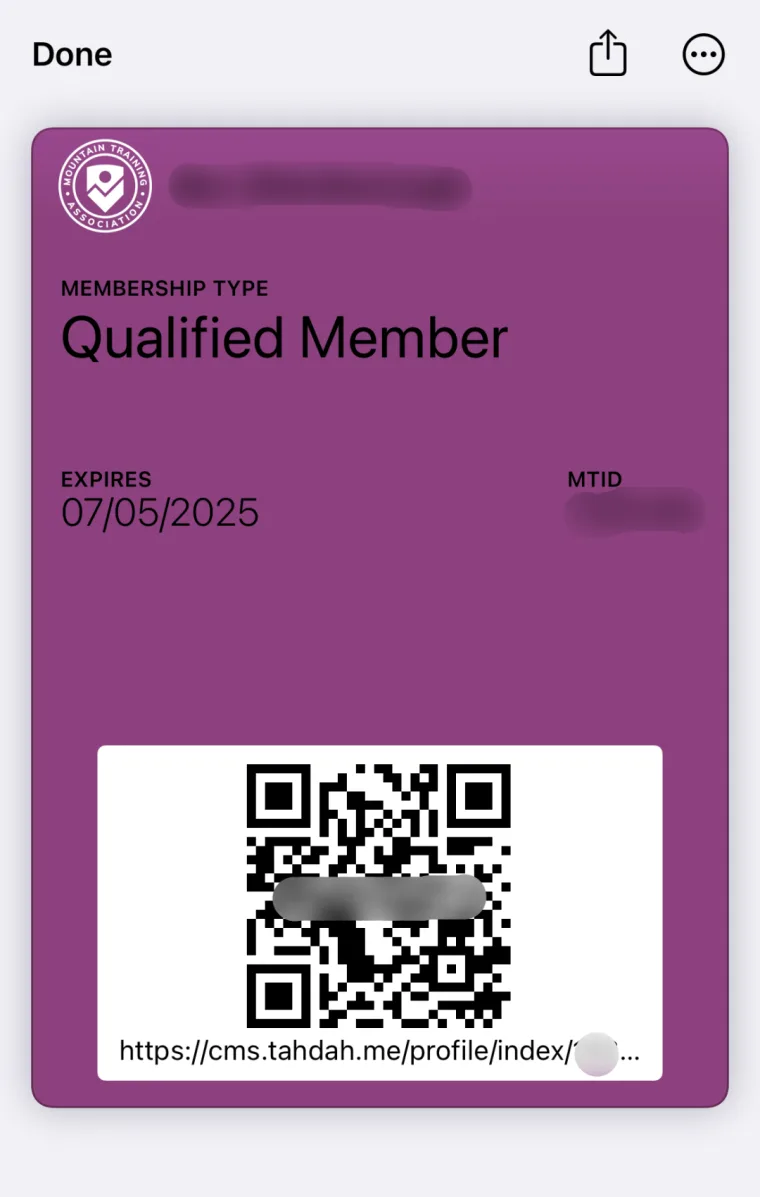
Mountain Training — put verified qualifications on the pass. Its digital membership cards work in Apple Wallet and Google Wallet and expose qualifications in pass details. A professional association card can prove capability as well as paid-up membership.
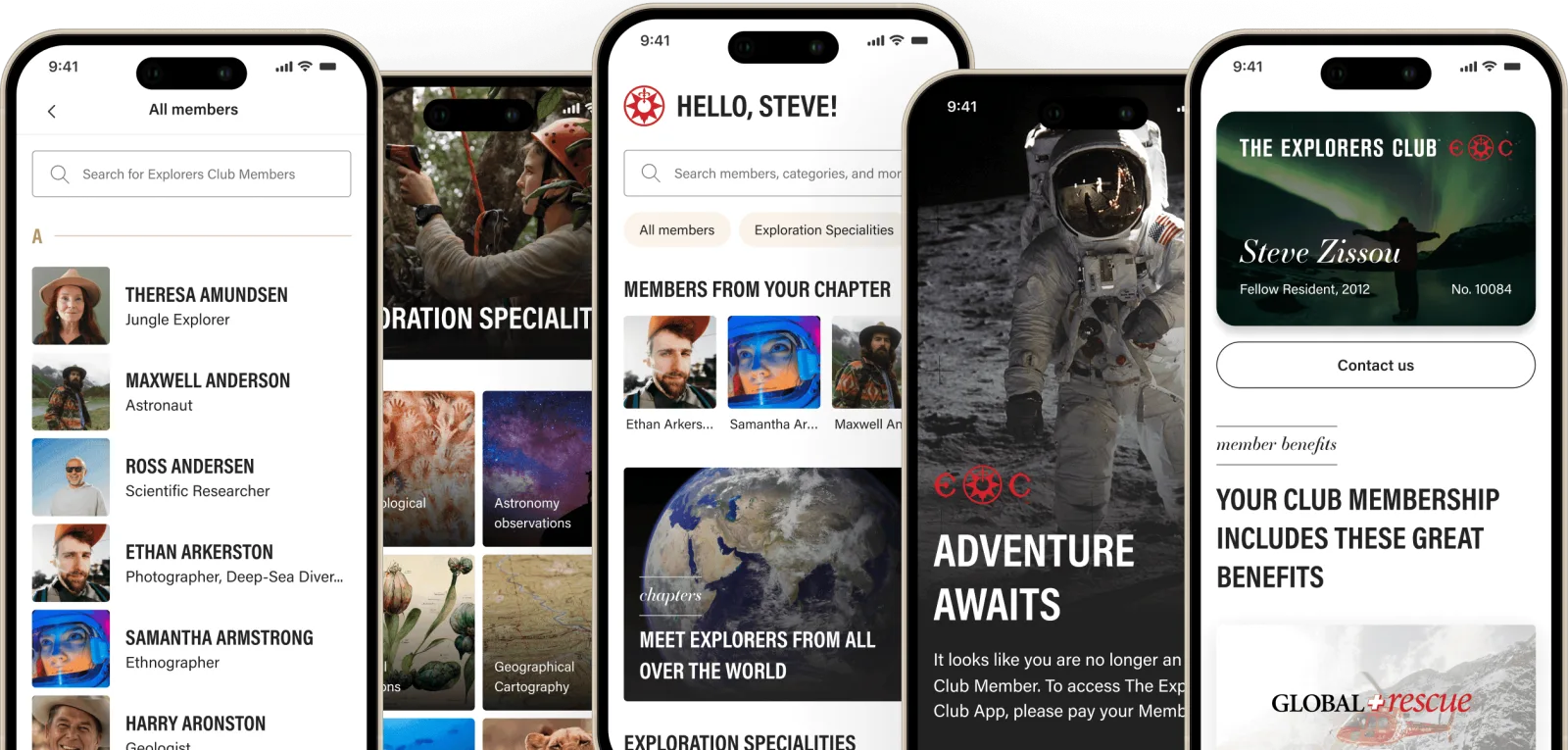
- The Explorers Club — make the card the front door to the member network. Its members-only app combines a digital membership card with a searchable roster, exploration specialties, chapters, reciprocal clubs, benefits, profile updates, and annual dues. The credential belongs beside the relationships it represents.
-
California Teachers Association — provide several save formats. CTA’s membership handbook supports Apple Wallet, Google Wallet, and a saved image, with a workflow for local leaders to reissue a card. Distribution and recovery are part of the membership-card system.
-
Chicago State Alumni Association — pair Wallet convenience with a print fallback. The CSAA card is downloadable to Apple or Google Wallet and can also be printed for campus benefits. A digital-first program can remain accessible without maintaining plastic inventory.
-
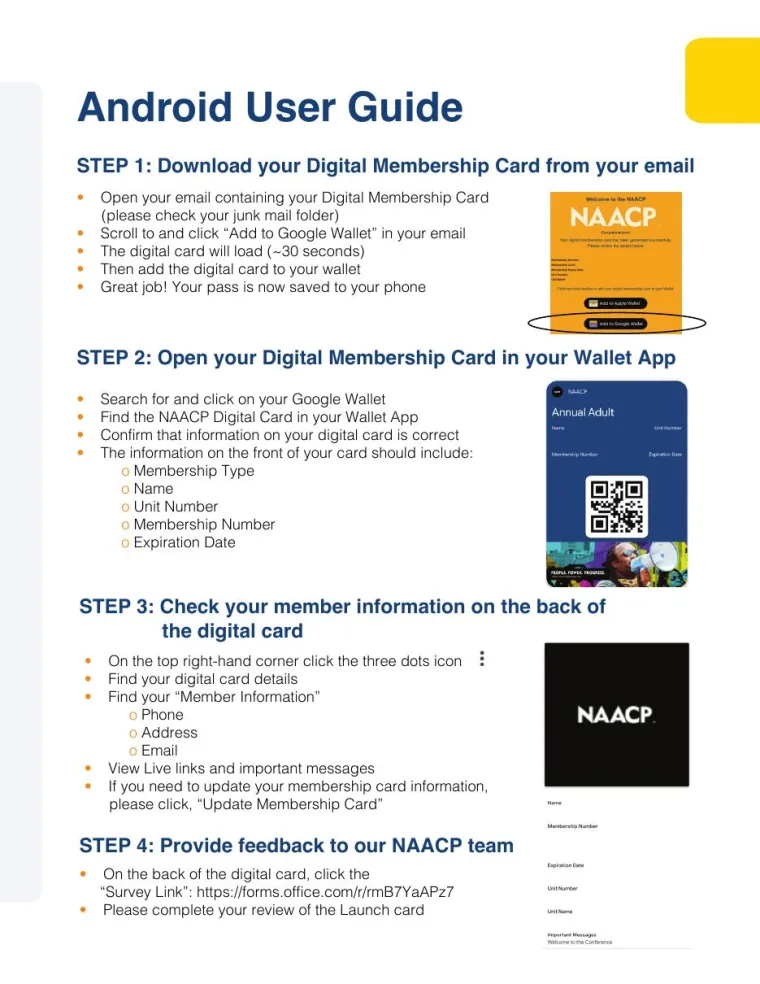
NAACP — put renewal and record correction on the back of the card. The NAACP digital membership card lets active paid members renew and update contact information from pass details, while its QR code remains an opaque organization identifier.
-
SEIU Local 1021 — connect member identity to organizing actions. Its union app includes a QR-coded digital member ID alongside contracts, training, notifications, and actions. The card can be the authenticated front door to participation, not only proof at a meeting.
-
American Academy of Sleep Medicine — offer both a member ID and a certificate. AASM members can retrieve a digital member ID card or a member certificate. Different audiences may need compact proof or a formal document from the same membership record.
-
SAE International — keep a printable route beside Wallet delivery. The SAE digital-card FAQ supports Apple Wallet, an Android pass wallet, and a printable card from the member account. A professional credential should not assume one phone platform.
-
American Bar Association — let the card replace the annual reprint. The ABA’s digital membership card is delivered by email, saved to a phone wallet, and updated without mailing another printed card. A professional association can make fast replacement and current benefits part of the credential itself.
Ten patterns worth borrowing
Across the 100 examples, the most reusable ideas are surprisingly practical:
- Put the member’s usable entitlement in plain language on the front.
- Keep the member ID stable while status, dates, and artwork update.
- Separate the permanent card from one-time guest, parking, or drink vouchers.
- Show remaining uses and the reset date for allowance-based memberships.
- Turn reciprocal logos into readable details and partner-finder links.
- Give households separate named cards while keeping shared benefits visible.
- Offer a Wallet or web route when the full app is not necessary.
- Keep a printable, staff-lookup, or photo-ID fallback for accessibility.
- Link the card to the next useful action: reserve, enter, renew, book, or ask for help.
- Design the scan result and staff workflow at the same time as the member face.
Choose the right format for your program
| Format | Best when | Main tradeoff |
|---|---|---|
| Apple Wallet and Google Wallet pass | Members need quick identity, barcode entry, updates, and no new app | Focused card surface; complex workflows live elsewhere |
| Organization app | Booking, content, account management, or community is used frequently | More features, but members must install and sign in |
| Mobile web card | Reach and fast rollout matter most | Easy fallback, but less persistent than a native wallet |
| NFC mobile credential | The phone must unlock doors or gates | Excellent access experience with more hardware and security work |
| PDF or printable card | The program is low-risk or needs a universal fallback | Broad compatibility, weak live status and update behavior |
For most organizations that already have a CRM or membership database, a Wallet pass is a strong front door: the member adds it from an email or web link, and the same card can update after a renewal, upgrade, or status change. Keep the database authoritative and treat the pass as the small, current view that the member and staff need.
When you are ready to move from inspiration to implementation, read how to create digital membership cards, compare digital membership card software, or explore the digital membership card use case.
Frequently asked questions
What should a digital membership card include?
Start with the member’s name, membership level or entitlement, current status, renewal or expiry date, and a scannable opaque member ID. Put benefits, support, terms, and the renewal link in the details view. Avoid encoding a name, email, or the access decision itself in the barcode.
Does a digital membership card need an app?
No. Apple Wallet and Google Wallet cards can be added from a link in email, SMS, or a web page. A dedicated app makes sense when members regularly book, browse content, manage accounts, participate in community, or use features that do not fit on a Wallet pass.
Can one digital card cover a family membership?
It can, but separate named cards are usually clearer for adult members. They can point to the same household account while retaining individual credential IDs. Guest passes and limited-use benefits should be separate items so they can be shared and redeemed without sharing the primary membership card.
Can a digital membership card work offline?
A saved Wallet card or in-app barcode can often be displayed without a network connection. Live verification, account changes, and some rotating codes still need connectivity. Define a staff fallback—photo ID lookup, a downloaded allow-list, or manual review—before launch.
Build your first wallet pass
Turn one JSON request into a pass that installs in Apple Wallet and Google Wallet, with live updates that reach both.